
Outsourced cyber security is increasingly being discussed as a sensible option for businesses. In this article, we look at the benefits of modern outsourced cyber security services in the UK.
Insights
12 Reasons to Consider Outsourced Cyber Security
Outsourced cyber security benefits
Technical capability and MDR
While there are many benefits to outsourced security services, the most important is arguably an increase in technical capability. Cyber security is complex, and it is important to get it right. When a company outsources their cyber security, they are doing it to ensure they have the necessary protections to protect their business from cyber attacks. In-house security teams are unlikely to possess a level of capability anywhere near a Managed Security Service Provider (MSSP), except for the largest organisations.
With outsourced cyber security services, businesses of all sizes can enjoy advanced Managed Detection & Response (MDR) services, benefiting from the latest cloud-based security technologies, such as EDR and XDR platforms. Advanced MSSPs combine this with cyber threat intelligence (CTI) and automation to automatically detect and block threats and remediate security incidents. This reduces alert fatigue and enables human analysts to focus on the most pressing issues.
Skills
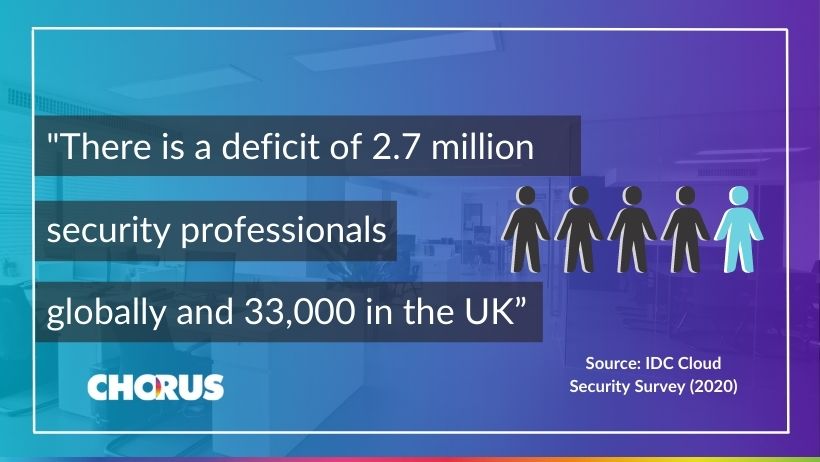
There is a global shortage of cyber security professionals. Worldwide, we have a deficit of 2.7 million security professionals and a shortage of 33,000 professionals in the UK. Because security experts are in such high demand, they command good salaries, and this makes it expensive for organisations to build their own cyber security operations centres (CSOCs). By partnering with an MSSP, organisations can benefit from the skills of expert security professionals without having to find, hire, train and retain them.
Cost savings
Outsourcing cyber security can be a smart way to save money. From a people perspective, organisations that outsource will save money on salaries, recruitment fees, sick pay, and annual leave. Companies can also save a lot of money from a technical perspective, as building an internal CSOC requires a lot of upfront investment in new platforms and processes. Outsourcing cyber security removes these challenges and delivers security expertise at a much lower cost, due to the economies of scale that MSSPs can achieve with their operating models. It’s also important to remember the financial devastation that a successful attack can cause, which is why it can be very cost-effective to invest in security.
Experience
With cyber security, there is no substitute for experience. Small in-house security teams cannot match the experience that an MSSP can provide. With so many customers, each in different industries with different challenges, MSSPs have seen many issues before. This experience is vital and enables MSSPs to apply learnings to all their customers. It is very difficult for in-house IT teams to gain adequate knowledge and experience when they are being stretched in different directions, operating in a ‘jack of all trades’ capacity.
Reduced pressure on internal teams
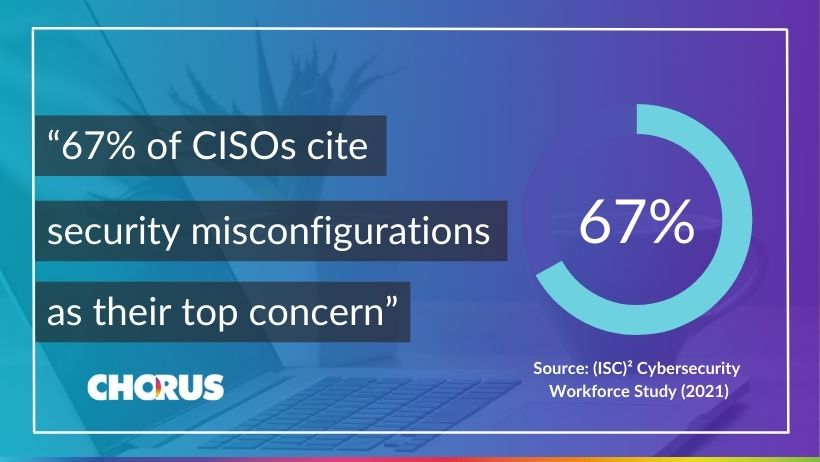
Internal IT teams and security teams in the UK are renowned for being overworked and under resourced. Generally, it isn’t a good idea to give IT teams responsibility for managing security. Cyber security often gets overlooked when other pressures affecting day-to-day business operations are placed on IT. In fact, 67% of CISOs cite security misconfigurations as their top cloud security concern, and that is why subject matter experts must look after an organisation’s cyber security. By outsourcing cyber security, organisations can free up time for already overstretched IT teams, so they can focus on their strategic projects and business as usual activities.
24/7 service
The average organisation cannot afford an internal CSOC for business hours, let alone a 24/7/365 operation. Outsourced cyber security is worth considering for this reason. Hacking groups don’t log off at the end of the working day, and threat actors often strike when defences are likely to be at their weakest – which is often out of hours. Managed security services usually offer a standard business hours service, a 24/7 service or an out-of-hours service to cover periods where an organisation’s security team isn’t working.
Continuity
If an organisation relies on a small internal cyber security team, there is a real risk of knowledge being lost when someone leaves the business. This is a common occurrence where stringent documentation and processes aren’t in place. A loss of knowledge will cost time and money to remedy and increase the likelihood of security vulnerabilities. Outsourced cyber security reduces this risk, as multiple security professionals will be responsible for a given business and work to agreed processes, which will be well documented within a central knowledge base and subject to a robust change management process.
Independent cyber security assessment
‘Marking your own homework’ is a dangerous game in cyber security. It’s important to remember that “you don’t know what you don’t know”. Outsourcing your cyber security to external experts is a great way to gain additional insights and recommendations for further improvements. In an industry as fast moving as cyber security, internal teams can’t be expected to keep up with all the latest developments. An MSSP should be aware of the most recent trends, events, and methods, enabling them to provide proactive advice.
Service maturity
An internal security team is unlikely to achieve the same level of service maturity as an MSSP. Good outsourced security services have slick ITIL-aligned processes, high quality IT service management (ITSM) tooling, and Service Delivery Managers whose job is to ensure the highest quality standards are met and SLAs are adhered to.
High standards and accreditations
MSSPs can help organisations achieve leading cyber security and information protection accreditations. MSSPs often hold certifications such as ISO 27001 and Cyber Essentials Plus themselves, but can also help their customers achieve these through specialist advice and consultancy work. Customers who have outsourced their cyber security will often find it easier to achieve accreditations, because of the best practices they follow as a result of the managed service.
Security reviews
Good MSSPs will provide security reviews and recommendations as part of their service. For example, a company’s security detections might be tagged in accordance with the MITRE ATT&CK® framework, so the MSSP can have more targeted conversations with the customer about their specific security vulnerabilities. Keeping security in-house doesn’t give you the same opportunities to discuss your security and listen to expert feedback.
Response times
Every second counts with cyber security. MSSPs can generally respond faster to security incidents than a small in-house security team with the people, processes, and technologies they have in place. With the latest monitoring tools, advanced automation capabilities, and dedicated teams of security analysts, MSSPs are constantly on guard and ready to respond. Outsourced security services usually track KPIs such as Mean Time to Detect (MTTD) and Mean Time to Respond (MTTR), ensuring that customers get rapid responses in line with SLAs.
Next steps
Chorus is a Microsoft Gold Partner with three Advanced Specialisations from Microsoft in cyber security.
From our 24/7 / 365 Cyber Security Operations Centre in Bristol, UK, we offer advanced MDR services to organisations of all sizes.
If you’re interested in outsourced cyber security services, contact us today.